
 Image 1 of 1
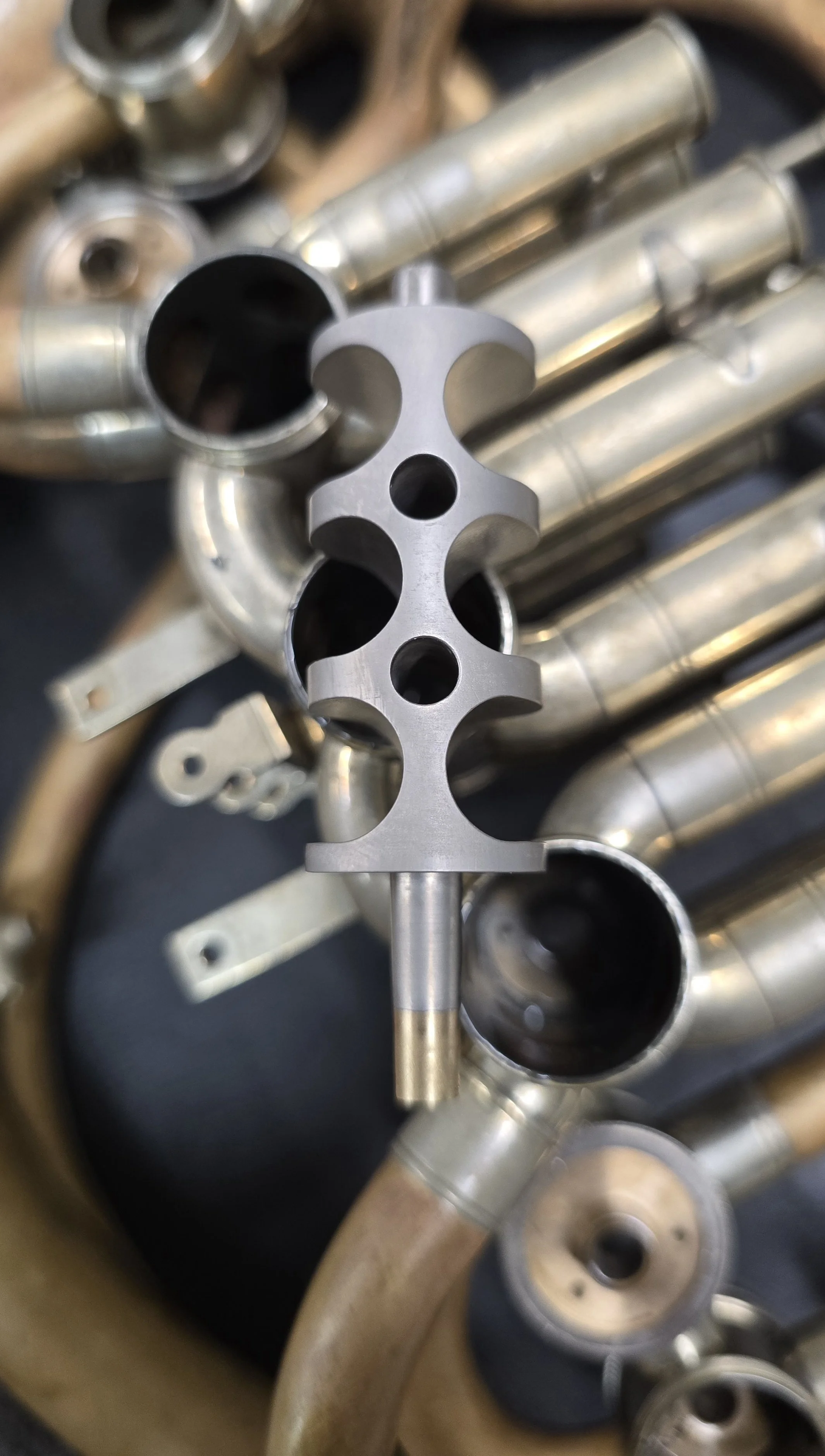
Over time, even a well-maintained French horn will experience valve wear. Mineral deposits in the water that accumulates inside the instrument act like fine sandpaper, slowly wearing away the surface of the rotors with every use. The result is valves that no longer seal properly — and a horn that becomes increasingly difficult to play.
The symptoms of worn valves are unmistakable to an experienced player. The horn feels stuffy and resistant. Note response loses its crisp, immediate start. Tones lack a solid core and feel unfocused. In short, a leaky horn fights you at every turn — and the French horn is already hard enough to play without your instrument working against you.
How do I know if my horn needs a rebuild?
At Reddick Hornworks, I use a precision leak testing machine that measures the actual air bypass occurring on each rotor on a scale of 0 to 8 — where 0 is completely airtight and 8 is wide open. Once a rotor reads 4 or above, it is time for a rebuild. Every valve rebuild includes a before and after compression test reading so you can see exactly what was wrong and confirm the results of the work.
Honest advice you can trust
A full valve rebuild is a significant investment. If your instrument is not worth the cost of the work, I will tell you so — and advise you not to spend the money unless the horn has sentimental value. I would rather give you an honest assessment than take your money for a repair that doesn't make financial sense.
What is included in a full valve rebuild:
Everything included in our Professional Ultrasonic Cleaning Service is performed as part of every valve rebuild, plus the following:
Rotor Electroplating Each rotor is electroplated in copper to restore the original fit and achieve an airtight seal, then nickel plated to protect against corrosion and wear for long-term durability.
Bearing Machining The rotor bearings are precision machined to eliminate vertical play and restore a tight, consistent fit — ensuring smooth, reliable valve action.
Want to see exactly how this process works? See the Full Six Step Rebuild Process →
The result is a horn that plays as good as new, with crisp response, solid tone, and effortless airflow through every valve.
Most horns will not need another valve rebuild for 20 or more years following this service.
Note: If slides are excessively loose or the rotors are damaged, repair is available at an additional fee and will be discussed with you before any work is performed.
A note on prevention
The best way to avoid a valve rebuild is a professional ultrasonic cleaning every year. Removing mineral buildup before it has a chance to wear your valves is far less expensive than rebuilding them later. Think of it as routine maintenance — the same way you change the oil in your car before the engine wears out.
Ready to learn more before booking? See the Full Six Step Rebuild Process →
Over time, even a well-maintained French horn will experience valve wear. Mineral deposits in the water that accumulates inside the instrument act like fine sandpaper, slowly wearing away the surface of the rotors with every use. The result is valves that no longer seal properly — and a horn that becomes increasingly difficult to play.
The symptoms of worn valves are unmistakable to an experienced player. The horn feels stuffy and resistant. Note response loses its crisp, immediate start. Tones lack a solid core and feel unfocused. In short, a leaky horn fights you at every turn — and the French horn is already hard enough to play without your instrument working against you.
How do I know if my horn needs a rebuild?
At Reddick Hornworks, I use a precision leak testing machine that measures the actual air bypass occurring on each rotor on a scale of 0 to 8 — where 0 is completely airtight and 8 is wide open. Once a rotor reads 4 or above, it is time for a rebuild. Every valve rebuild includes a before and after compression test reading so you can see exactly what was wrong and confirm the results of the work.
Honest advice you can trust
A full valve rebuild is a significant investment. If your instrument is not worth the cost of the work, I will tell you so — and advise you not to spend the money unless the horn has sentimental value. I would rather give you an honest assessment than take your money for a repair that doesn't make financial sense.
What is included in a full valve rebuild:
Everything included in our Professional Ultrasonic Cleaning Service is performed as part of every valve rebuild, plus the following:
Rotor Electroplating Each rotor is electroplated in copper to restore the original fit and achieve an airtight seal, then nickel plated to protect against corrosion and wear for long-term durability.
Bearing Machining The rotor bearings are precision machined to eliminate vertical play and restore a tight, consistent fit — ensuring smooth, reliable valve action.
Want to see exactly how this process works? See the Full Six Step Rebuild Process →
The result is a horn that plays as good as new, with crisp response, solid tone, and effortless airflow through every valve.
Most horns will not need another valve rebuild for 20 or more years following this service.
Note: If slides are excessively loose or the rotors are damaged, repair is available at an additional fee and will be discussed with you before any work is performed.
A note on prevention
The best way to avoid a valve rebuild is a professional ultrasonic cleaning every year. Removing mineral buildup before it has a chance to wear your valves is far less expensive than rebuilding them later. Think of it as routine maintenance — the same way you change the oil in your car before the engine wears out.
Ready to learn more before booking? See the Full Six Step Rebuild Process →